

The High Stakes of Cleanroom Operations
In pharmaceutical manufacturing, medical device production, and semiconductor fabrication, microscopic contamination can destroy entire production batches worth millions. A single particle measuring just a few microns can compromise sterile drug formulations, damage sensitive electronic components, or invalidate research results.
Cleanroom environments exist to prevent these disasters, but simply building a cleanroom provides no guarantee of proper performance. Only rigorous testing and certification verify that these critical spaces maintain the controlled conditions essential for their intended purposes.
Understanding Cleanroom Classification Standards
Cleanroom classification defines acceptable particle concentrations for specific particle sizes within controlled environments. International standards establish these classifications, with lower numbers indicating stricter cleanliness requirements.
The classification system addresses particles of various sizes, recognizing that different applications have different sensitivity levels. Pharmaceutical operations might focus on particles that could harbor microorganisms, while semiconductor manufacturing concerns itself with even smaller particles that could create defects in integrated circuits.
Classification testing involves measuring airborne particle concentrations throughout the cleanroom space using precision instruments. These measurements occur under specific operational states—as-built before equipment installation, at-rest with equipment installed but inactive, and in-operation during normal production activities.
Each operational state reveals different aspects of cleanroom performance. As-built testing validates construction quality and basic system capability. At-rest conditions demonstrate performance without process-generated contamination. In-operation testing proves the facility maintains classification during actual use.
“The difference between an installed system and a commissioned system is the difference between potential and performance.”
– NEBB Standards Philosophy
Critical Parameters Beyond Particle Counts
While particle concentration defines cleanroom classification, numerous other parameters determine overall performance and compliance. Air change rates control how quickly the ventilation system replaces contaminated air with filtered air, directly impacting particle removal efficiency.
Room pressurization maintains controlled airflow patterns that prevent contamination migration between spaces. Higher-classification areas maintain positive pressure relative to less-clean adjacent zones, ensuring air flows from clean to less-clean rather than the reverse.
Air flow uniformity ensures consistent conditions throughout the cleanroom. Unidirectional flow cleanrooms require parallel air streams moving at uniform velocity, while non-unidirectional facilities need proper mixing to prevent stagnant zones where particles accumulate.
Filter integrity represents perhaps the most critical factor in cleanroom performance. Even microscopic filter leaks allow unfiltered air to bypass filtration systems, directly compromising particle control. Comprehensive leak testing identifies these deficiencies before they threaten production.
The Comprehensive Testing Protocol
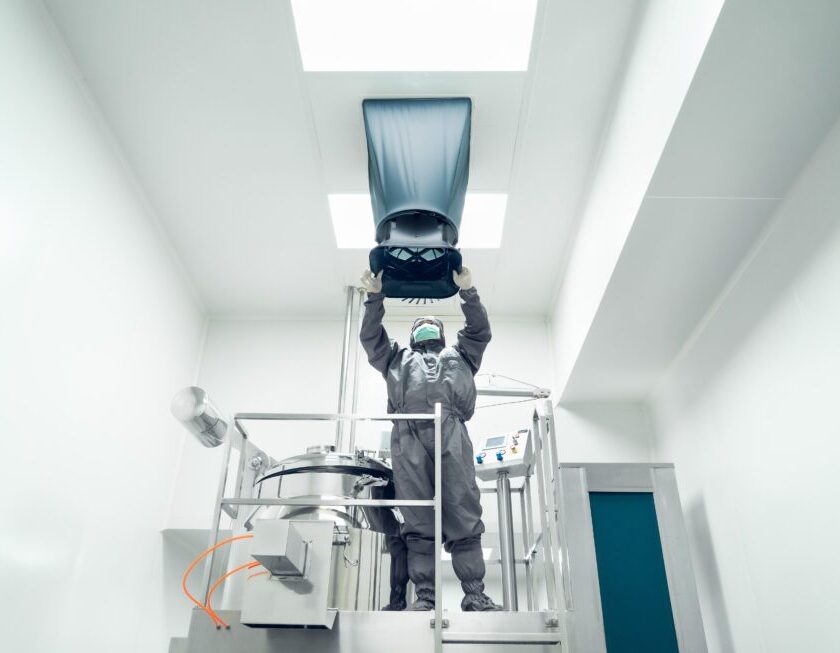
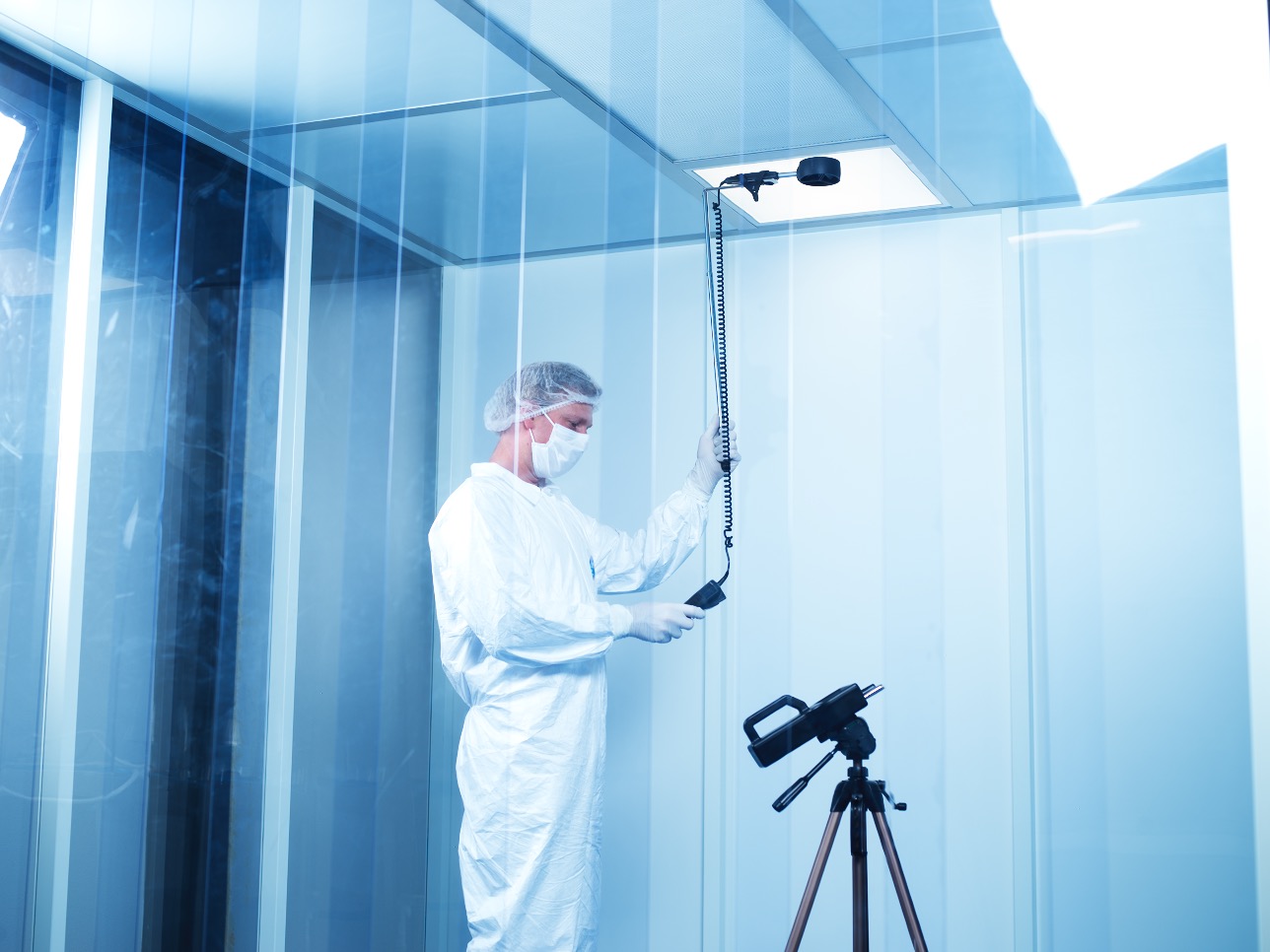
Professional cleanroom certification encompasses more than twenty distinct tests, each addressing specific performance parameters. Air flow velocity measurements verify that supply air moves at design speeds, ensuring adequate air changes and proper flow patterns.
Filter leak testing uses aerosol challenges to identify even tiny breaches in filter media or gasket sealing. This critical test verifies that filtration systems actually remove particles rather than allowing bypass around damaged or improperly installed filters.
Particle counting establishes classification compliance by measuring concentrations at multiple locations and particle sizes. Strategic sampling locations ensure representative coverage of the entire cleanroom volume rather than spot-checking a few convenient positions.
Pressurization testing confirms proper pressure cascades between adjacent spaces and adequate pressure differentials to maintain contamination control. This testing must account for door openings and other dynamic conditions that affect pressure relationships.
Recovery testing evaluates how quickly the cleanroom returns to classified conditions after contamination challenges or process disturbances. Facilities must demonstrate adequate system capacity to maintain classification during actual operational conditions rather than only under ideal circumstances.
Environmental Control Testing
Temperature and humidity uniformity testing ensures proper environmental conditions throughout cleanroom spaces. Many processes require tight control of these parameters, and uneven conditions can affect product quality or create uncomfortable working conditions.
Lighting level measurements verify adequate illumination for detailed work without excessive glare or shadows. Proper lighting contributes to both product quality through improved visual inspection and worker safety by reducing eye strain and improving visibility.
Sound level testing identifies excessive noise that could affect worker concentration or communication. While cleanrooms require substantial air handling capacity, properly designed systems achieve necessary performance without creating unacceptable noise levels.
Vibration testing becomes critical for applications involving precision equipment or sensitive processes. Excessive vibration from HVAC equipment or other sources can affect manufacturing accuracy or disturb delicate operations.
Specialized Testing for Unique Applications
Electrostatic testing addresses static charge buildup that could damage sensitive electronic components or attract particles to product surfaces. Facilities handling static-sensitive materials require verification of electrostatic dissipation systems and proper grounding.
Conductivity testing ensures adequate electrical grounding throughout cleanroom surfaces and equipment. This testing becomes particularly important in environments where static discharge could ignite flammable materials or damage electronic products.
Electromagnetic interference testing identifies problematic EMI levels that could affect sensitive equipment operation. Manufacturing facilities for electronic devices often require verification that electromagnetic emissions from support equipment remain within acceptable limits.
Airflow parallelism testing applies specifically to unidirectional flow cleanrooms, verifying that air streams maintain parallel flow patterns rather than turbulent mixing. This specialized test ensures proper contamination removal in the most stringent cleanroom classifications.
The Certification Process Timeline
Cleanroom certification typically follows a phased approach aligned with construction and startup activities. Initial testing occurs immediately after construction completion, validating proper installation and basic system functionality before equipment installation begins.
Subsequent testing phases occur as equipment installation progresses and operational activities commence. This staged approach identifies problems early when correction remains relatively straightforward, rather than discovering deficiencies only after full production startup.
Final certification testing demonstrates compliance under actual operational conditions with full process equipment operation and normal staffing levels. This comprehensive validation proves the facility maintains classified conditions during real-world use rather than only under idealized test scenarios.
Documentation throughout the certification process creates permanent records demonstrating compliance with regulatory requirements and industry standards. These records become essential during regulatory inspections, customer audits, and accreditation reviews.
The Certification Process Timeline
Many cleanrooms fail initial testing due to preventable problems introduced during design or construction. Filter installation represents a frequent failure point, with improper gasket compression or damaged filter media allowing unfiltered air bypass.
Inadequate air change rates stem from undersized air handling systems or excessive ductwork resistance that prevents achieving design airflow volumes. These problems require expensive system modifications to correct after construction completion.
Pressurization failures often result from excessive leakage through poorly sealed construction joints or improperly specified doors and windows. Maintaining pressure differentials requires relatively airtight envelope construction that many contractors fail to achieve without specialized expertise.
Airflow pattern problems create stagnant zones or short-circuiting where supply air reaches return grilles without properly sweeping the cleanroom space. These deficiencies compromise particle removal efficiency even when air change rates meet design specifications.
Selecting Qualified Certification Providers
Certification provider qualifications directly affect both testing quality and regulatory acceptance. Providers should hold recognized industry certifications demonstrating technical competency and adherence to established procedural standards.
Equipment capabilities determine testing accuracy and comprehensiveness. Professional certification requires substantial investment in precision instruments with documented calibration traceability to national standards.
Experience with similar facility types and classifications provides valuable insight into specific testing challenges and regulatory requirements. Providers experienced in pharmaceutical facilities bring different perspectives than those focused on electronics manufacturing, even though both require cleanroom certification.
Independence represents an important qualification, as certification providers should maintain objectivity rather than having financial interests in particular test outcomes. Third-party certification carries more regulatory weight than testing performed by equipment suppliers or construction contractors.
The Path to Reliable Cleanroom Operations
Professional cleanroom certification provides the verification necessary to operate controlled environments with confidence. Whether commissioning new facilities or validating existing operations, comprehensive testing ensures these critical spaces perform as intended.
Organizations operating cleanrooms cannot afford uncertainty about environmental conditions affecting product quality and regulatory compliance. Investment in professional certification delivers both peace of mind and documented proof of due diligence.
The journey toward certified cleanroom operations begins with planning. Engaging certification professionals during design and construction phases prevents costly problems while ensuring facilities meet all applicable standards from day one. Your products and reputation depend on properly controlled manufacturing environments—professional certification verifies you maintain the conditions essential for success.